How to Write a Visa Sponsorship Letter (With Free Template)
Enyong Carinton Tegum
Published on March 24, 2026

A visa sponsorship letter is one of the most important documents in an international hire. For African professionals moving abroad, it is often the piece of paper that turns a job offer into a real relocation. Whether you are an employer writing one or a candidate who needs to request one, this guide explains exactly what a sponsorship letter for a visa should contain — and gives you a free template you can adapt.
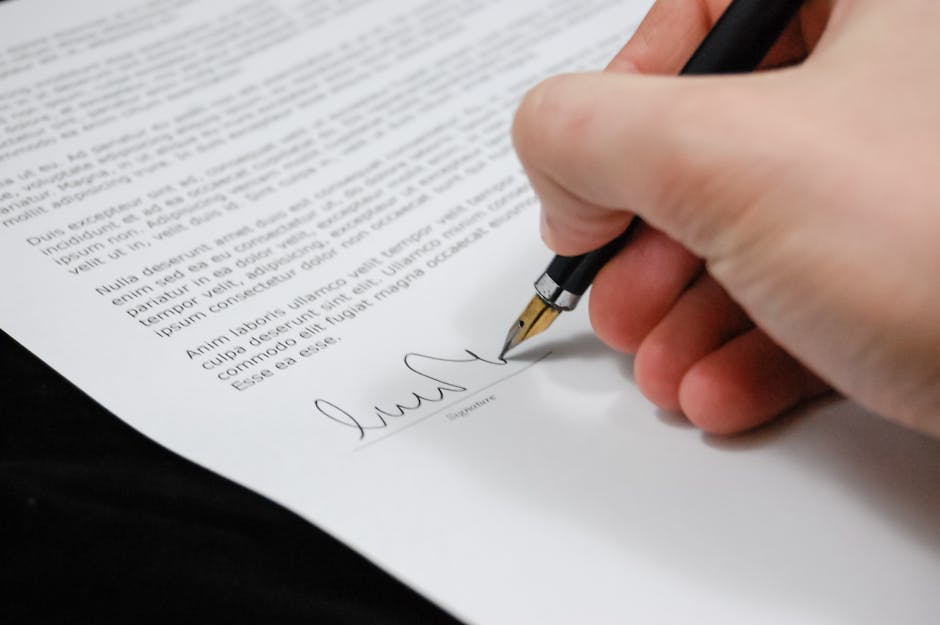
What Is a Visa Sponsorship Letter?
A visa sponsorship letter (sometimes called a letter of visa sponsorship) is a formal document in which an employer confirms that they are sponsoring a named individual for a work visa. It states that a genuine job exists, describes the role and terms, and confirms the employer's commitment to support the worker's visa application.
Immigration authorities and embassies use this letter as evidence that the employment is real and that the candidate has legitimate backing. It usually accompanies — and sometimes precedes — the official sponsorship certificate the immigration system requires.
When Is a Sponsorship Letter Needed?
- When submitting a work-visa application to an embassy or immigration department.
- When an employer needs to confirm a job offer and sponsorship commitment in writing.
- When a candidate must show proof of sponsorship for biometrics, interviews, or supporting documents.
If you are still learning how the wider process works, our explainer on how employers sponsor foreign workers gives helpful context.
What to Include in a Visa Sponsorship Letter
A strong sponsorship letter is specific, factual and professional. It should contain:
- Employer details — company name, address, registration or sponsor licence number, and contact information, ideally on official letterhead.
- Date — the date the letter is issued.
- Addressee — the relevant embassy, consulate or immigration authority (or "To Whom It May Concern").
- Candidate details — full legal name, nationality, passport number and date of birth.
- Job details — job title, a short description of duties, start date, contract type and duration.
- Salary and benefits — the agreed pay and any relevant benefits or relocation support.
- Sponsorship statement — a clear sentence confirming the employer is sponsoring the candidate's work visa and will fulfil its obligations.
- Signature — name, job title and signature of an authorised company representative.
Free Visa Sponsorship Letter Template
Adapt the template below. Replace the bracketed fields and always confirm the exact wording your destination country requires.
[Company Letterhead]
[Date]
To: [Embassy / Consulate / Immigration Authority]
Re: Visa Sponsorship for [Candidate Full Name], Passport No. [Number]
To Whom It May Concern,
This letter confirms that [Company Name], located at [Company Address] and registered under [Registration / Sponsor Licence Number], is sponsoring [Candidate Full Name], a national of [Country], for a work visa to take up employment with our organisation.
[Candidate Name] has been offered the position of [Job Title], commencing on [Start Date], on a [contract type] basis. The role involves [brief description of duties]. The agreed gross salary is [Amount and Currency] per [year/month], together with [any benefits or relocation support].
We confirm that this is a genuine vacancy, that [Candidate Name] is qualified for the role, and that [Company Name] accepts the responsibilities associated with sponsoring this work visa. We kindly request that all necessary assistance be provided to facilitate the visa application.
Should you require further information, please contact us at [Phone] or [Email].
Yours faithfully,
[Authorised Signatory Name]
[Job Title]
[Company Name]
How the Letter's Wording Changes by Country
The template above is a solid general-purpose starting point, but immigration systems differ in what they expect a supporting letter to reference:
- United Kingdom — the letter should reference the employer's sponsor licence number and, once issued, the Certificate of Sponsorship reference number, since UK Visas and Immigration cross-checks these against its own records.
- Canada — for LMIA-backed roles, the letter should reference the LMIA number once approved; for LMIA-exempt categories, it should instead cite the specific exemption category (e.g. intra-company transfer) the offer falls under.
- Germany and the EU — letters supporting a Blue Card or national work visa typically need to state the salary explicitly against the relevant minimum threshold, since approval is often salary-gated.
- Gulf states — sponsorship letters are usually paired with a labour ministry-approved contract; the letter itself is often shorter, with the formal contract carrying most of the legal weight.
Always ask your employer's HR or immigration team which specific reference numbers and wording your destination country expects — a generic letter missing a required reference number is one of the most common causes of processing delays.
A Second Template: Renewal or Extension Sponsorship Letter
If you're already working under sponsorship and your employer needs to confirm continued sponsorship for a visa renewal or extension (rather than a brand-new hire), the letter is shorter and focuses on continuity:
[Company Letterhead]
[Date]
To: [Embassy / Consulate / Immigration Authority]
Re: Continued Visa Sponsorship for [Candidate Full Name], Passport No. [Number]
To Whom It May Concern,
This letter confirms that [Candidate Full Name] has been continuously employed by [Company Name] as [Job Title] since [Original Start Date], and that [Company Name] wishes to continue sponsoring their work visa for a further period.
[Candidate Name]'s employment terms remain [unchanged / updated as follows: describe any changes], with a current gross salary of [Amount and Currency] per [year/month]. [Company Name] confirms it continues to meet its sponsor obligations and requests that the necessary extension/renewal be processed.
Yours faithfully,
[Authorised Signatory Name]
[Job Title]
[Company Name]
Tips for Candidates Requesting a Sponsorship Letter
- Ask after the offer, not before. Request the letter once you have a firm job offer.
- Provide your details cleanly. Give the employer your exact passport name, number and nationality to avoid errors.
- Check every detail. A mismatch between the letter and your passport or visa form can cause delays or refusals.
- Keep copies. Save digital and printed versions for your records and your application.
How Long Is a Sponsorship Letter Valid For?
Most immigration authorities expect a sponsorship letter to be recently dated relative to when you submit your visa application — commonly within one to three months, though exact windows vary by country and visa route. If your visa application is delayed for any reason (missing documents, appointment backlogs, additional checks), you may need to request an updated letter with a fresher date rather than relying on the original. Ask your employer's HR contact early if you suspect any delays, so a refreshed letter is ready before your original one is considered stale.
What to Do If Your Sponsorship Letter Is Rejected or Queried
If an embassy or immigration authority queries or rejects a sponsorship letter, it is almost always due to one of a few fixable issues, not a fundamental problem with your case:
- Missing reference numbers — such as a sponsor licence, Certificate of Sponsorship, or LMIA number required by that specific country's system. Ask your employer to reissue the letter with the correct reference included.
- Inconsistent details — a name spelled differently from your passport, a job title that doesn't match your offer letter, or a salary figure that doesn't match your contract. Request a corrected version before resubmitting.
- Missing signatory authority — some systems require the letter to be signed by a specific type of company officer (director, HR head, immigration compliance officer). Confirm your employer's signatory meets that requirement.
- Outdated date — as covered above, request a freshly dated letter if significant time has passed since it was issued.
In nearly all cases, the fix is a corrected or reissued letter from your employer, not a fundamentally different approach — stay in close contact with your employer's HR or immigration team throughout the process.
Common Mistakes to Avoid
- Vague job descriptions or missing salary information.
- Names or passport numbers that do not match official documents.
- No letterhead, signature, or company registration details.
- Promising benefits the company cannot actually deliver.
- Treating a sponsorship letter as a substitute for the official sponsorship certificate — you usually need both.
Frequently Asked Questions
Who writes the visa sponsorship letter?
The employer (or their HR/legal representative) writes and signs it. The candidate provides accurate personal details.
Is a sponsorship letter the same as a Certificate of Sponsorship?
No. The letter is a supporting confirmation; the certificate is the official document issued through the immigration system. Many applications use both.
Can I write my own sponsorship letter?
No — it must come from the sponsoring employer to be valid. However, you can share this template with your employer to speed things up.
Does a sponsorship letter guarantee a visa?
No. It strongly supports your application, but the final decision rests with the immigration authority.
What currency and salary should the letter show?
It should show the actual agreed salary in the destination country's currency, meeting any minimum salary threshold for the visa route.
Do I need a sponsorship letter for a visa renewal, or just the first application?
Most sponsored visa routes require fresh confirmation of continued sponsorship for renewals and extensions too, not just the initial application — use the renewal template above as a starting point, adapted to your destination country's exact requirements.
Can the letter be sent by email, or does it need to be posted?
Most immigration systems now accept a scanned or digitally signed letter uploaded as part of an online application, though a small number of processes still expect original hard copies — check your specific visa route's current requirements before assuming either way.
What if my employer's HR team has never written one before?
This is common with first-time sponsors. Share this template with them directly — it covers the core elements nearly every immigration authority expects, though they should still verify country-specific wording requirements with their legal or immigration adviser.
Conclusion
A well-written visa sponsorship letter removes doubt: it tells the embassy the job is real, the candidate is qualified, and the employer stands behind the hire. Use the template above, keep every detail accurate, and pair it with the official sponsorship documents your route requires.
Looking for employers who issue these letters? Browse verified visa-sponsorship jobs and build a CV tailored to the role before you apply.
Related guides
Keep building your move abroad with these in-depth guides from TontonAfriJobs:
- What Is Visa Sponsorship? A Complete Guide for Job Seekers
- What Is a Work Visa Sponsorship? How Employers Sponsor Foreign Workers
- Qatar Jobs for South Africans: How to Get Sponsored in 2026
Ready to act? Browse current visa-sponsored and remote jobs open to Africans or build a country-tailored CV with our free CV builder.

Written by
Enyong Carinton Tegum
Founder, TontonAfriJobs · Full-Stack Developer · SEO & Digital Marketing · CCNA & Google IT Certified
Enyong Carinton is a full-stack web developer, SEO and digital marketing specialist from Buea, Cameroon, and the founder of Tonton Business. Drawing on over a decade of building for the web, he created TontonAfriJobs to connect Africa's workforce with legitimate visa-sponsored and remote jobs abroad — and to end the silent rejections African applicants face.
Read full profile & credentialsGet new visa-sponsored & remote jobs in your inbox
Join thousands of African professionals. New opportunities and relocation guides, no spam — unsubscribe anytime.
Related Articles